It was never too late.
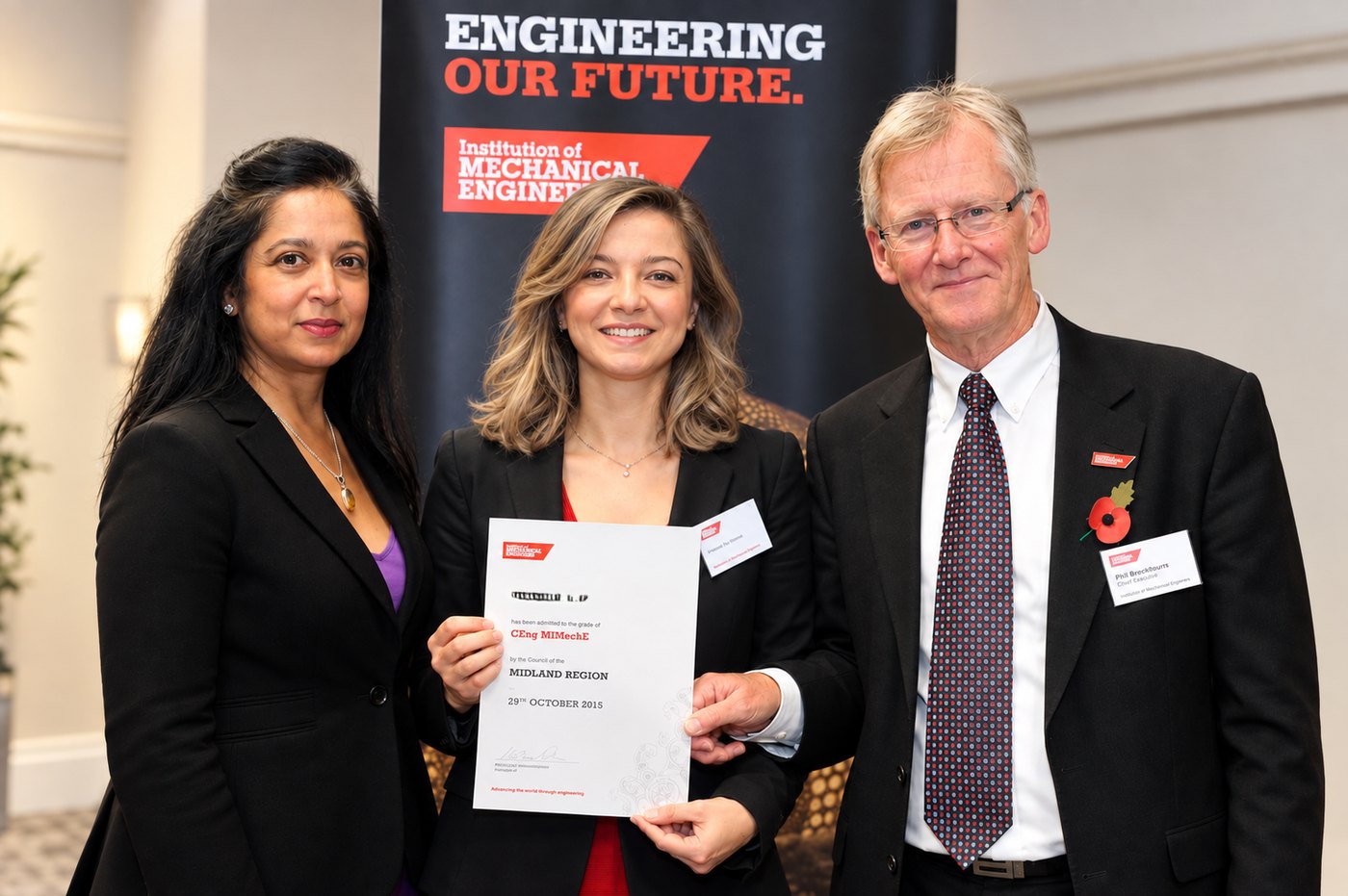
“I think I've left it too late for Chartership.” I hear this more than almost anything else — usually from engineers with fifteen or twenty years behind them who are, by any honest measure, more than ready. I completed mine through the IMechE in 2015, well into my career, and the years I thought might count against me turned out to be the evidence. I have mentored engineers towards Chartership for more than a decade, across the IMechE, the IET and IOM3. This page is what I tell them.
Five things I tell every engineer chasing Chartership
- 1
You're more ready than you think.
The engineers who hesitate are almost always the ones who'd sail through. If you're waiting to feel “ready”, that feeling is the signal to start — not to wait.
- 2
It rewards evidence, not effort.
Chartership isn't about doing more. It's about learning to show what you've already done. Most people underestimate the experience they're already sitting on.
- 3
Write things down now.
Not the night before. Keep a simple record of the projects you lead and the calls you make. Your application is being written every day — you just have to capture it.
- 4
Find someone who's done it.
A mentor doesn't make you Chartered — you do. But they help you see your own work clearly, which is the hardest part to do on your own.
- 5
It's never too late.
I've mentored people who Chartered decades into their careers. The years you think count against you? They're the evidence.
Chartership isn't a test of potential. It's a record of what you've already done.
How it actually works
What it is
Chartered Engineer (CEng) is a professional registration held with the Engineering Council and awarded through a licensed institution. It is assessed against UK-SPEC, a published standard with five competence areas: knowledge and understanding, design and development, responsibility and leadership, communication, and professional commitment. You demonstrate them with evidence from work you have actually done.
Which institution
Pick the one whose members do the work you do. Mechanical and vehicle engineers usually go through the IMechE; electrical, software and systems engineers through the IET; materials, minerals and mining through IOM3 — my own degree was materials science, which is why that one is close to my heart. All three register you with the same Engineering Council against the same standard.
The route
Your academic base is assessed first; if your degree isn't accredited, or isn't at Master's level, the institutions have individual assessment routes for exactly that. Then comes the application itself — your evidence against the competences — followed by a professional review interview with assessors from your own field.
What a mentor is for
A mentor doesn't make you Chartered — you do. What a mentor does is help you see your own work clearly, because most people underestimate the experience they are already sitting on, and that is the hardest thing to judge on your own.
If you are mid-application and stuck, or convinced you have left it too late, message me on LinkedIn. Tell me your discipline, how many years you have, and where the application has stalled. linkedin.com/in/denizcaliskan-ceng ↗
On twenty years as a woman in engineering, and why the most important part of the climb is who you bring with you.