After eight modules at Oxford, the last question was the simplest — and the hardest.
The final part of what an Oxford Executive Leadership programme taught me — about purpose, and why it comes last for a reason.
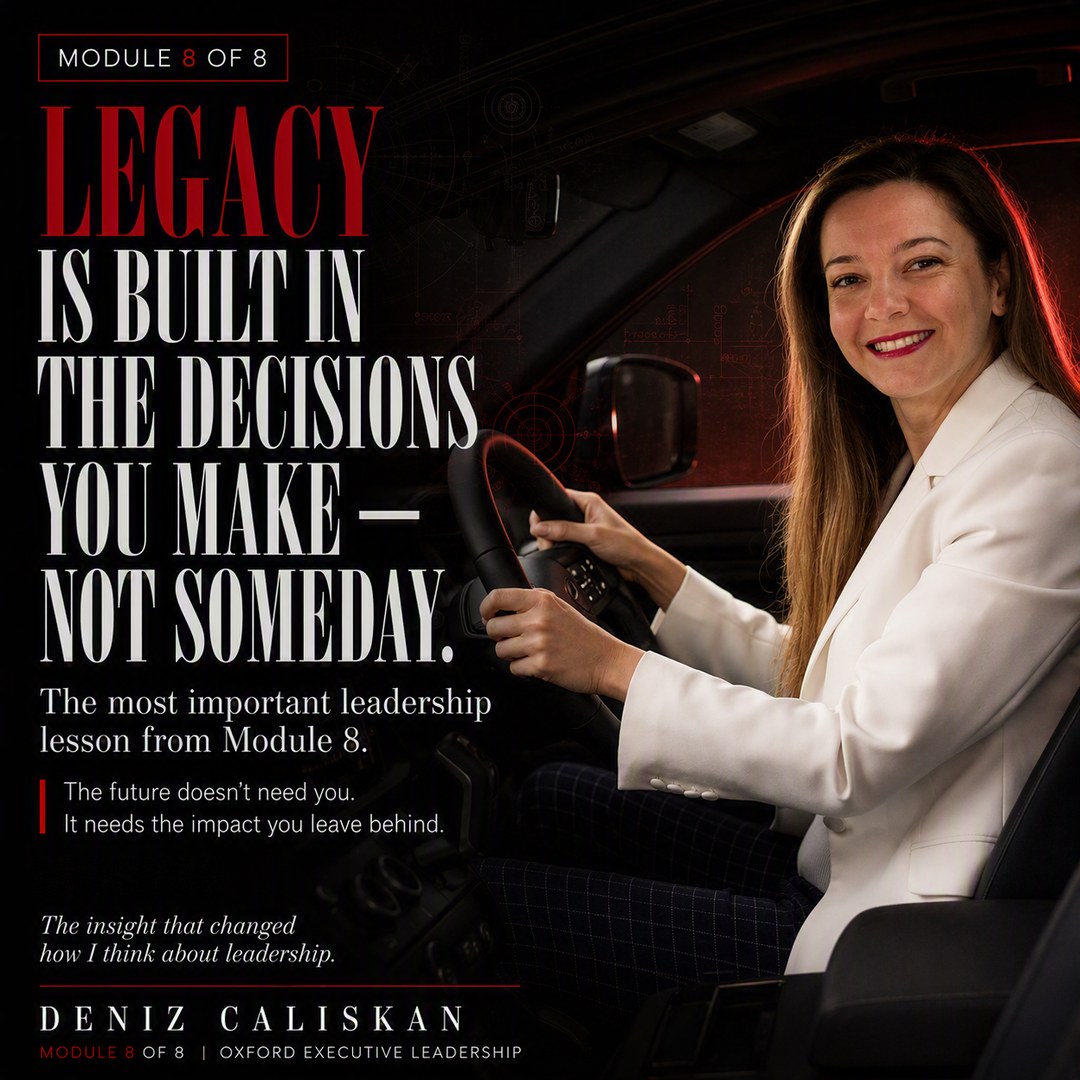
We'd covered vision, engagement, decisions, power, teams, change, complexity. And then the final module asked the question that quietly underpins all of it: why do you lead at all?
It sounds soft. It isn't. After everything else, it landed as the most practical question of the lot — because your purpose is what every other leadership skill is ultimately in service of. Get the purpose wrong, or never examine it, and you can be brilliant at all the mechanics while pointing them somewhere that doesn't matter to you.
The idea that tied the whole programme together for me was the link between purpose and authenticity. You can only lead authentically when there's alignment between who you are, what you believe matters, and what your organisation is trying to do. When those line up, leadership feels less like a performance and more like an extension of yourself. When they don't, no amount of technique hides the gap — people feel it.
For me, the honest answer to "why do you lead?" isn't the vehicles, as much as I love them. It's the people. It's being the person for someone else that a few people were for me, early on, when I was the only woman in the room and not at all sure I belonged. It's holding the door open. If I've built anything worth passing on across twenty years, it's that — and this final module gave me permission to say it out loud rather than treat it as a footnote to the "real" work. It is the real work.
The last piece was the tension between authenticity and adaptability. Be too rigidly "yourself" and you can't grow into new situations. Be too adaptable and you become no one, bending to every room. The resolution isn't choosing one — it's staying anchored to your purpose while flexing your style. Your purpose is the fixed point. Everything else can move.
What this whole series gave me
Eight modules, and if I had to compress them into one sentence: leadership isn't a set of techniques you apply to people. It's the responsibility you take for a group of them, anchored to a purpose you've actually examined. The mechanics matter — but only in service of knowing why you're doing it, and for whom.
Thank you for following along through all eight. Writing these made me a more deliberate leader, which is more than I expected when I started sharing.
So I'll end where the programme did: why do you lead? I'd genuinely love to read your answers.