Visibility isn't vanity.
Meeting a Dakar stage winner, and why the people we can see quietly decide what we believe we can do.
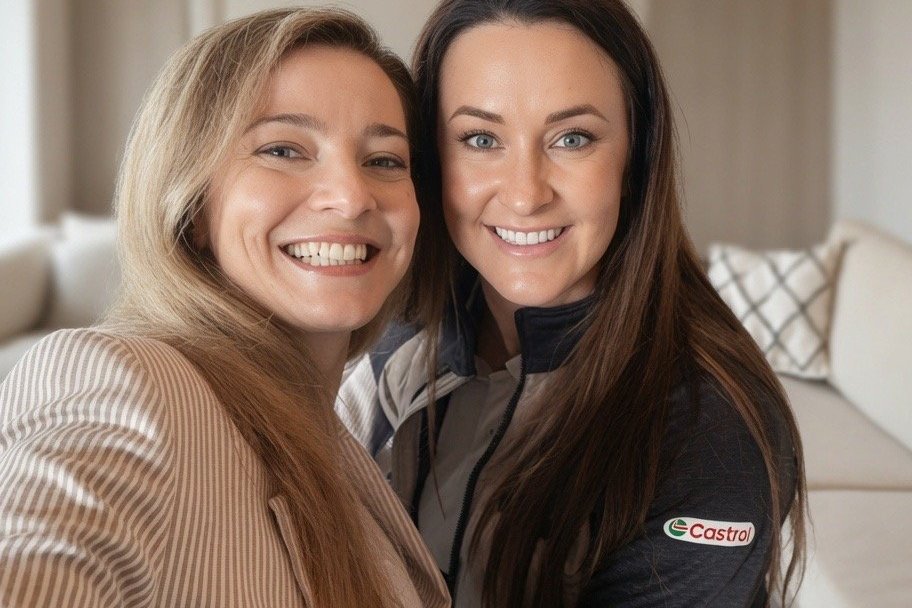
I met Sara Price at Gaydon in February, a few weeks after the Defender Rally team came back from Dakar. JLR invited colleagues to a session on the campaign, a team photo and the chance to meet the drivers.
If you don't follow rally raid, the short version is this: in 2024, on her Dakar debut, she became the first American woman and only the third woman ever to win a stage of the Dakar Rally. In January this year she raced it again, this time for Defender, and finished second in her class with stage wins along the way.
What struck me most wasn't the trophies. It was that she didn't wait to be picked. She backed herself and made history in the sand.
I posted about it on LinkedIn and ended with a line I want to unpack properly here, because it is easy to say and harder to defend: visibility isn't vanity. It's a door held open for the next one through.
The objection worth taking seriously
There is a reasonable case against visibility, and I've heard it from good engineers. The work should speak for itself. Self-promotion is noise. The people who are loudest about their careers are not always the ones doing the best work, and everyone in a technical field has met someone who was better at being seen than at being right.
All of that is true. But it treats visibility as something you do for yourself. The kind I mean works differently. It isn't about being admired. It's about being evidence.
What visibility actually does
When someone sees a person like them doing a thing, three quieter things happen.
It moves the line between impossible and unusual. Before 1997 no woman had won a Dakar stage. After Jutta Kleinschmidt did, it was no longer impossible — just rare. That is a bigger shift than it sounds. "Impossible" stops people from trying. "Rare" only tells them it will be hard.
It changes what "someone like me" looks like. Most people decide whether a path is open to them by a quick, unconscious check: do the people on it resemble me? If every senior engineer in your building looks one way, you don't need anyone to tell you that you don't fit. You draw the conclusion yourself, and you never put your hand up. One visible exception is often enough to break the pattern.
It makes the route ordinary. This is the one I see most in mentoring. Engineers working towards Chartership rarely lack the experience. What they lack is a picture of someone a step or two ahead who looks like them and found the process unremarkable. The moment they meet that person, the application stops being a test of whether they are good enough and becomes paperwork. The route hasn't changed. Their sense of whether it's meant for them has.
None of that requires the visible person to say a word. It only requires them to be seen.
Why it costs something
The people who end up as evidence rarely chose it. Being the first, or one of very few, means every result gets read as a verdict on everyone like you. A bad day on a stage isn't just a bad day; someone will treat it as proof. Plenty of capable people decide they'd rather not carry that, and I understand why.
That is exactly why it matters when someone does it anyway, at the hardest event in the sport, with the result there for everyone to see. The trophies are hers. The evidence belongs to everyone watching.
You have an audience too
It is tempting to think this only applies to people on start lines or stages. It doesn't. Everyone has a small audience: the graduate in your team, the apprentice on the line, the junior engineer who watches how you handle a design review. They are running the same quiet check — does anyone here look like me, and how did they get there?
For me, that woman is Mary Barra. She joined General Motors at eighteen as a co-op student, checking fender panels and inspecting hoods to help pay her tuition, went on to study electrical engineering, and in 2014 became the first woman to run one of Detroit's Big Three carmakers. The title is the headline. What matters to an engineer watching is the route: it ran through the plant floor, not around it.
For most of us, being visible doesn't mean a podium. It means not shrinking the parts of our story that someone behind us might need to see: the unusual route, the late qualification, the career that didn't follow the standard path. Those details feel like things to smooth over. To the right person, they are the most useful thing you can share.
The door
I've written before about the door you hold open behind you. Visibility is the version of that you can do without knowing who is coming through. You don't get to see most of the people it helps. You just have to trust that someone is watching who needed to know it could be done.
So, the question I asked on LinkedIn, and the one I'd most like you to sit with: who is the woman in your field who made you think "if she can, I can"? And who, without you knowing it, might be saying that about you?