How do you know if an investment is actually worth it?
Part 3 of my Stanford finance series for non-finance leaders — how businesses decide where to put their money, and how to weigh risk against return.
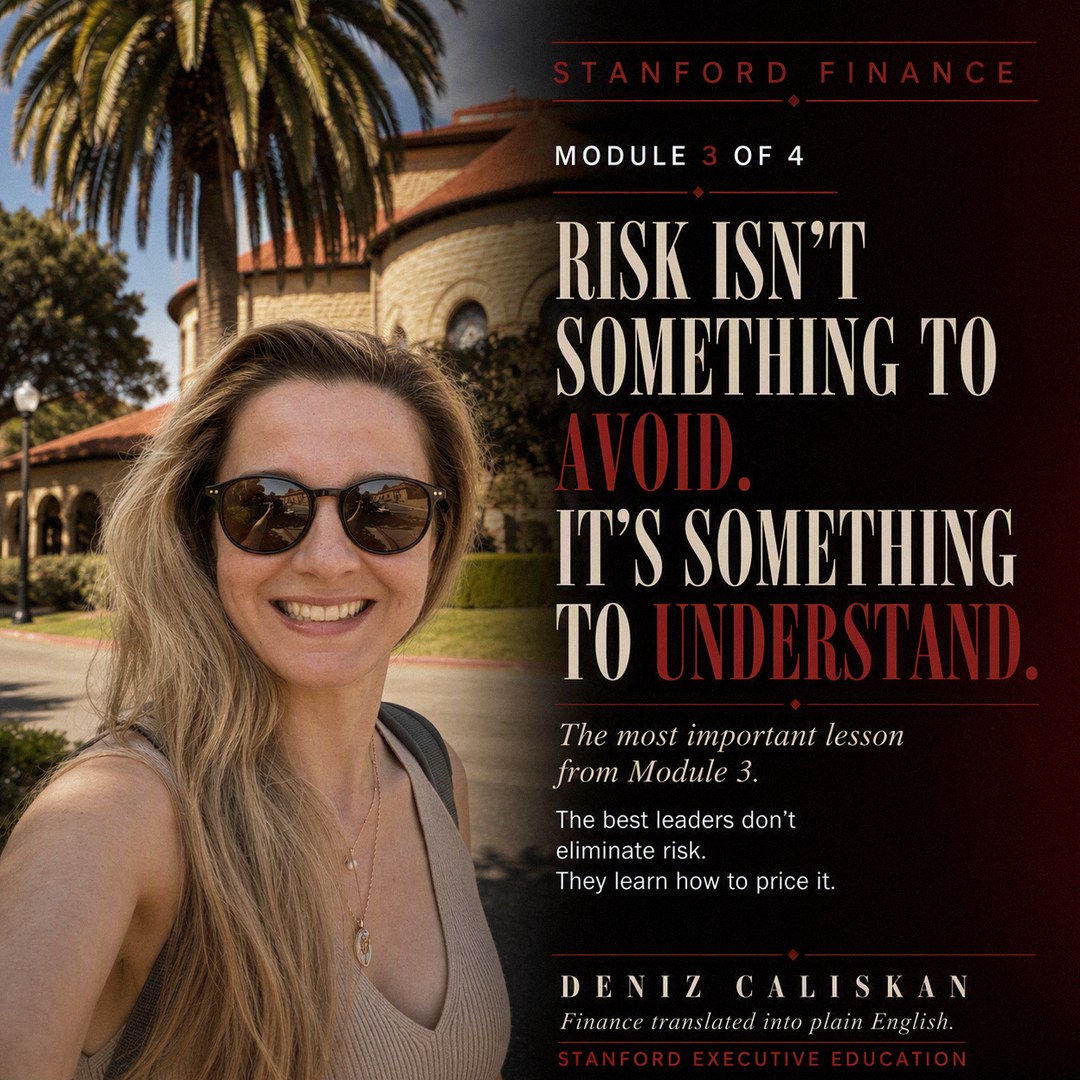
Every business has more ideas than money. So the real question leaders face constantly is: of all the things we could invest in, which ones are actually worth it? This module gave me a much clearer way to think about that.
The core question: does it create more than it costs?
Strip away the technique and every investment decision comes down to one comparison: will this generate more value than it consumes? Put money in now, get (hopefully more) money out later — but as we saw in the last part, future money is worth less than today's, so you can't just add it up naively.
The tools finance uses — payback period, net present value, rate of return — are all just structured ways of answering that single question honestly, accounting for the time and the risk involved. You don't need to compute them by hand. You need to know they exist and what they're really asking.
Risk and return travel together
The idea that reshaped my thinking: you cannot talk about return without talking about risk. A high potential return usually comes with higher risk — that's not a coincidence, it's the price of the possibility. If someone offers you a high return with supposedly no risk, that's the moment to be most suspicious.
Good decisions aren't about chasing the biggest number. They're about being honestly compensated for the risk you're taking. Sometimes the "boring" lower-return option with far less risk is the better call. Sometimes it's worth the gamble. The skill is seeing both sides of the trade clearly rather than being seduced by the upside alone.
Sunk costs don't count
One practical lesson I use constantly: money already spent is gone, and it should not drive the next decision. We've all seen projects kept alive purely because "we've already invested so much." Finance is ruthless about this — the only question that matters is whether future investment will generate future value. The past is a story, not a factor.
What I took into practice
Before backing anything, I now ask three questions: what does it really cost (including the wait), what's it realistically worth in today's terms, and am I being properly compensated for the risk? And I try hard to ignore what's already been spent. It's a simple discipline that quietly prevents a lot of expensive mistakes.
Next in the series: the levers that actually move a business's financial performance — and where a non-finance leader can have the most impact.
What's the best "walk away" decision you've made — where ignoring the sunk cost was the right call? I'd love to hear.