You don't need to be in finance to move the numbers.
Part 4 of my Stanford finance series for non-finance leaders — the handful of levers that actually drive financial performance, and where you can push.
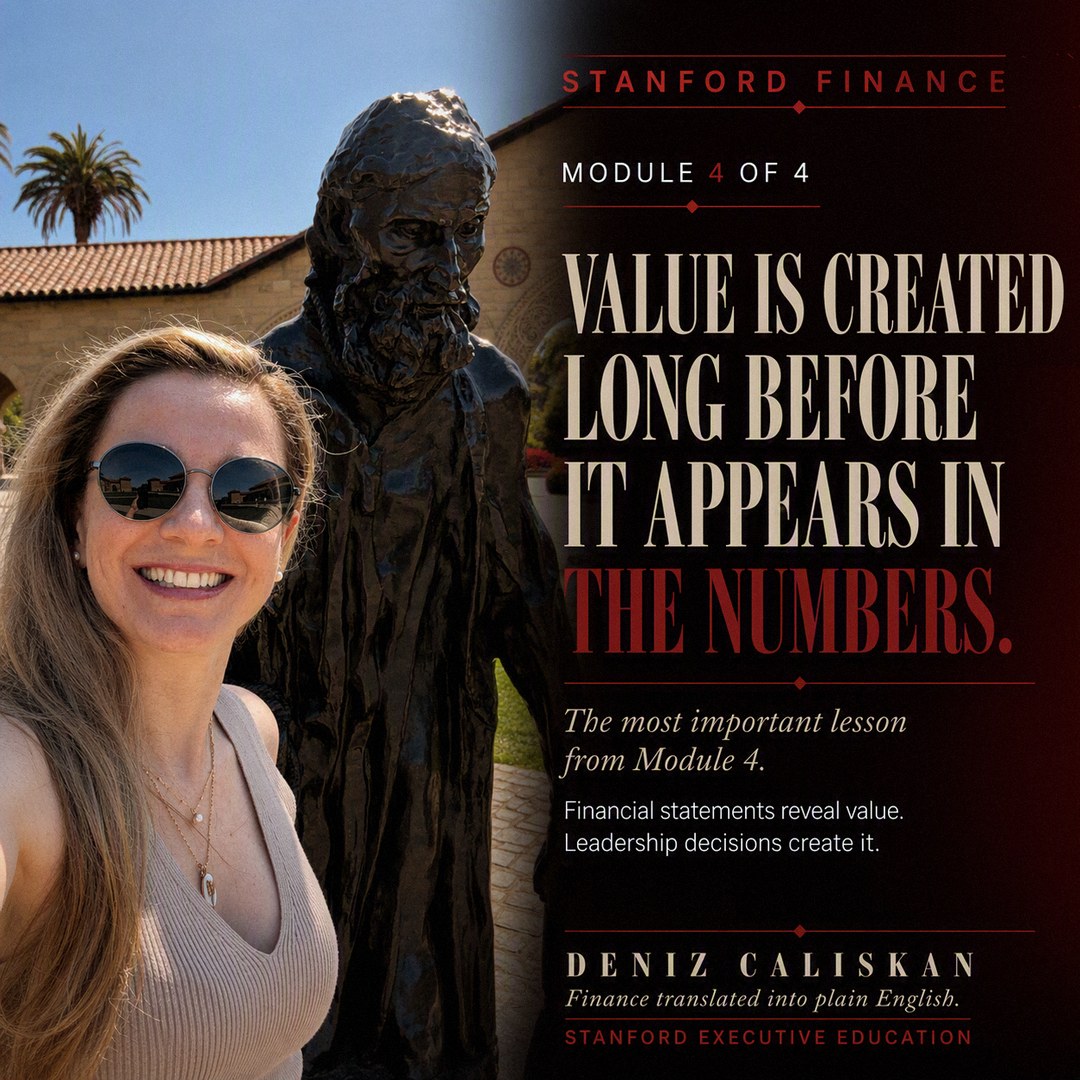
Here's the reassuring thing I came away with: the financial performance of a whole business, however complex, comes down to a surprisingly small number of levers. And most of them can be influenced by people who don't work in finance at all — which means you have more power over the numbers than you might think.
The levers, in plain terms
Almost everything that improves financial performance does so through one of a few routes:
- Sell more, or sell for more — grow revenue through volume or value.
- Spend less to deliver it — improve margin by managing cost without damaging quality.
- Use your assets harder — get more output from the same equipment, space, or people.
- Free up cash — get paid faster, hold less idle stock, don't tie money up unnecessarily.
That's essentially it. Every clever financial metric is ultimately tracking movement in one of these. And notice: a huge amount of each lever is pulled outside the finance department — in operations, in how teams work, in the daily decisions of people leading the actual work.
Why this matters for non-finance leaders
This was the empowering part. I used to think financial performance was something finance "owned." It isn't. The engineer who reduces waste on a line, the manager who speeds up a process, the team that gets a product out faster — they're all moving financial levers, whether they use the vocabulary or not.
Once you can see the levers, you can connect your everyday work to the numbers leadership cares about. And being able to say "here's how what my team does affects cash and margin" is one of the most career-defining skills a non-finance leader can develop. It's how you get taken seriously in the rooms where resources are decided.
Finance is a language, not a gate
If there's one thing this whole series taught me, it's that finance isn't a locked room you're either allowed into or not. It's a language — and like any language, you can learn enough to be dangerous far faster than you'd expect. You don't need to be fluent. You need enough to follow the conversation, ask a sharp question, and connect your work to what the business is trying to achieve.
That's within reach for anyone willing to spend a little time on it. It was for me — an engineer who once nodded along nervously in finance meetings.
What I took into practice
I now think of my team's work in terms of the levers: are we helping revenue, margin, asset use, or cash? Being able to translate the work into that language changed how I'm heard by senior stakeholders — and it's a translation any leader can learn.
That's the series. Four ideas that turned finance from a wall into a set of tools. If it helped even a little, it's done its job.
Which of the four parts was most useful to you? And what should I demystify next?